
The Importance of Diversity Sports Media
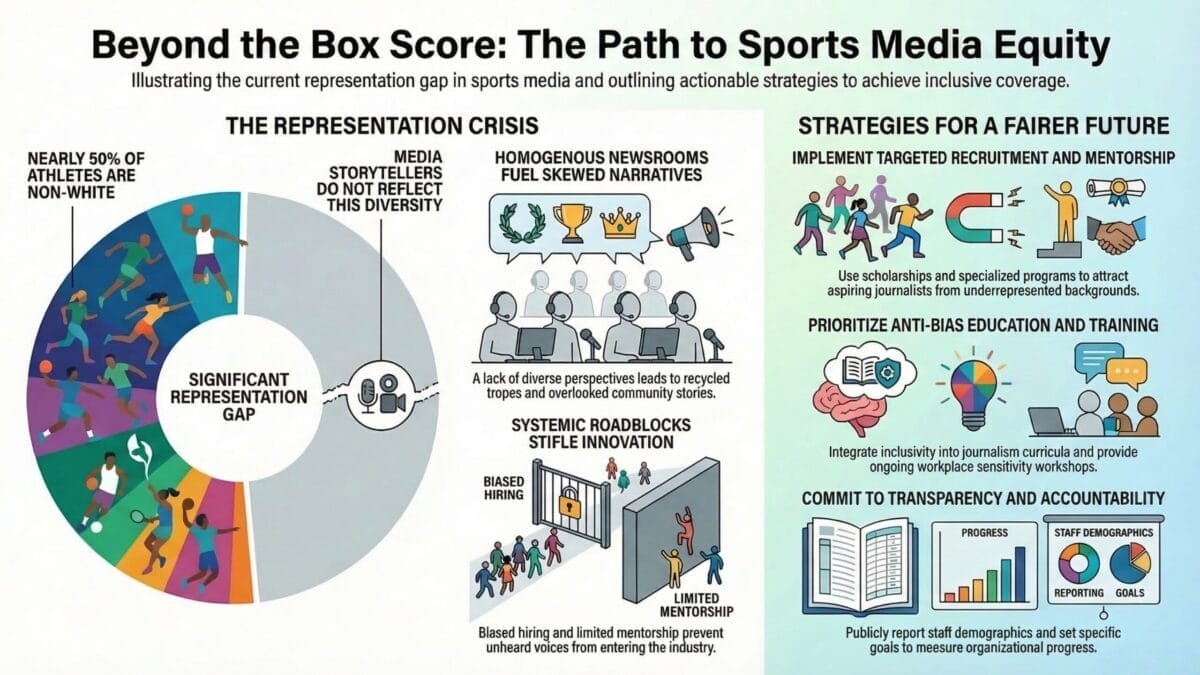
Consider this: nearly half of all athletes aren’t white. The storytellers in sports media? That’s a different story. A significant gap exists. (Nielsen, 2023). This article explores the current state of diversity sports media and the critical need for inclusive sports coverage, ensuring sports media mirrors reality and features a richer selection of varied voices for fair sports reporting. The lack of representation impacts narratives and audience engagement. We’ll discuss why diversity in sports media matters and how to achieve it.
Why Diversity in Sports Media Matters
Sports media, a powerful influencer, hasn’t always succeeded in portraying the full array of personalities on the field and among the fans. This under-representation spans race, ethnicity, gender, sexual orientation, and disability. The consequences are far-reaching, impacting who shapes the stories, the stories themselves, and how they’re delivered.
A key indicator is the relative scarcity of reporters and commentators from underrepresented communities. When the press box and broadcast booth lack diverse perspectives, narratives can become skewed. Familiar tropes are recycled, and subjects of vital importance to diverse groups are often overlooked. This alienates viewers and diminishes the overall richness of sports coverage.
The Impact of Diversity Sports Media
Underestimating the importance of diversity sports media is a mistake. It’s more than just a matter of courtesy; it safeguards the accuracy, relevance, and appeal of sports journalism. Diverse perspectives enrich understanding through varied angles, untold stories, and innovative approaches. The result is more compelling stories that deeply connect with audiences.
Inclusive sports coverage is essential for a fairer world. Sports has a unifying power, transcending divides. But when media focuses solely on one segment of the population, it reinforces barriers and perpetuates harmful stereotypes. By striving for sports media mirroring reality, we dismantle these barriers, creating a space where everyone feels welcome and represented.
Roadblocks to Achieving Diversity in Sports Media
Why does sports media often lack diversity? Systemic issues, such as biased hiring practices and limited mentorship opportunities for reporters from underrepresented backgrounds, play a significant role. Furthermore, traditional media organizations, often characterized by homogenous staff and limited perspectives, stifle innovation and prevent unheard voices from rising.
Another challenge is unconscious bias in sports journalism. Even well-intentioned journalists can inadvertently perpetuate outdated stereotypes or overlook crucial stories from marginalized groups. Examples include overemphasizing the physicality of Black athletes while praising the intelligence of White athletes, or minimizing the experiences of LGBTQ+ athletes and fans.
Strategies to Promote Diversity in Sports Media
Addressing the issue of diversity in sports media requires a comprehensive strategy that targets both systemic and individual levels. First and foremost, increasing the representation of reporters and commentators from marginalized groups is crucial. This can be achieved through targeted recruiting, mentoring programs, and scholarships for aspiring journalists from diverse backgrounds.
Media organizations must commit to building inclusive workplaces. This includes implementing anti-bias policies, conducting awareness training, and fostering a culture of respect. A supportive environment attracts diverse talent and ensures that diverse perspectives are valued and heard.
The Role of Education and Training in Fostering Diversity
Education and training are invaluable for cultivating diversity in sports media. Journalism schools and industry organizations should integrate inclusivity into their curricula. Aspiring reporters must understand the importance of sensitivity, recognize their own biases, and produce content that is inclusive and welcoming.
Additionally, media organizations should provide ongoing learning opportunities and resources to promote understanding and acceptance. Workshops, presentations, and guest speakers sharing their experiences can be highly effective. By investing in training, organizations empower their staff to create better, more inclusive content.
Leveraging Social Media to Amplify Diverse Voices
Social media is a powerful tool for promoting diversity in sports media. It provides a platform for marginalized individuals to share their stories, challenge mainstream narratives, and connect directly with audiences. Athletes, reporters, and fans from all backgrounds use social media to highlight issues such as discrimination and inequality in sports.
However, social media also has its drawbacks. It can be a breeding ground for negativity and misinformation. Media organizations and users must actively combat these negative forces and promote a more positive online environment. This includes establishing clear community guidelines, monitoring user content, and addressing instances of harassment and abuse.
Measuring Progress and Maintaining Accountability
To achieve meaningful change in diversity sports media, it’s essential to track progress and maintain accountability. Media organizations should carefully monitor the demographics of their staff and openly report their findings. This transparency holds organizations accountable and encourages them to strive for improvement.
Furthermore, media organizations should set specific diversity and inclusion goals and regularly assess their progress towards achieving them. This requires self-reflection, soliciting feedback, and collaborating with external organizations.
The Future of Sports Reporting: Embracing Diversity
The future of sports journalism depends on its ability to embrace diversity sports media. As the world evolves, media organizations must adapt to meet the needs of an increasingly diverse audience. This requires a fundamental shift in mindset – from viewing diversity as an obligation to recognizing it as a competitive advantage.
By prioritizing inclusive sports coverage, striving for sports media mirroring reality, and fostering a culture of fairness, sports media can create a product that resonates with a broader audience. This benefits the industry while simultaneously promoting social justice.
Looking Ahead: Building an Inclusive Sports Media Ecosystem
In conclusion, achieving truly inclusive sports media requires ongoing effort and commitment at all levels. From recruiting diverse talent to creating welcoming newsrooms and producing equitable coverage, a comprehensive approach is essential. By adhering to these principles, sports media can accurately reflect the world, engage wider audiences, and contribute to a more just society.

Vince Douglas Gregory is the ‘petulant puppet master’ of a sports media landscape addicted to scripted rage and performance art. As the architect of VDG Sports, he bypasses the corporate talking heads to expose the unfiltered truth behind the narratives.
An unstable thinker and astute scholar, Vince thrives on dismantling the mediocre click-bait addicts who trade reality for engagement. If you want boring stats, go elsewhere. If you want the raw reality of the game, you’re in the right place. Consider yourself warned.