
Fourth and two from the opponent’s 38-yard line. Fourth quarter. Down by four points. Around eight minutes remaining. I watched the head coach signal for the punt team. Again.
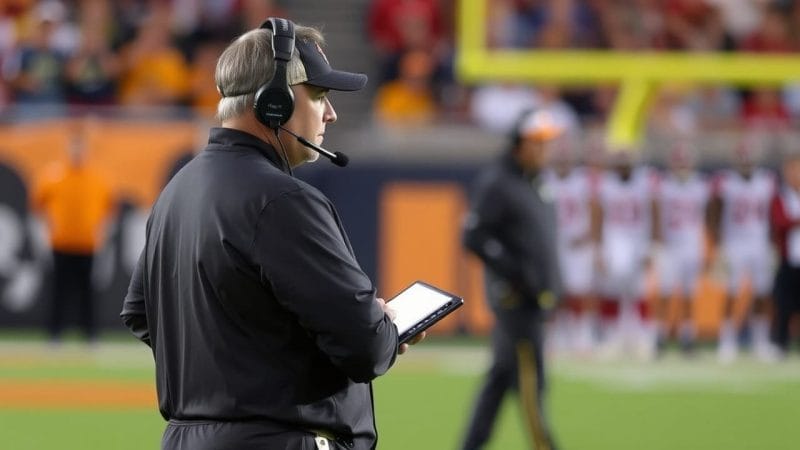
This wasn’t an isolated moment. This was the forty-seventh time this season I’d seen essentially the same decision play out across different stadiums, different teams, different circumstances. And somewhere around game number thirty-two, a disturbing pattern crystallized in my mind that I couldn’t unsee: The most brilliant tactical minds in professional football were systematically choosing caution over courage at the exact moments when boldness could change everything.
What started as casual Sunday viewing transformed into an unintentional research project. I began keeping mental notes, then actual notes, then obsessive documentation of critical fourth-down decisions, clock management choices, and play-calling patterns in high-leverage situations. What emerged wasn’t just disappointing—it was revealing about something much deeper than football strategy.
The Moment I Realized Something Was Wrong
Picture yourself settling into your couch for what should be an exciting primetime matchup. Two evenly matched teams, playoff implications on the line, the kind of game that should showcase the absolute pinnacle of strategic thinking and competitive fire. The first half unfolds with careful, methodical drives. Nothing particularly creative, but competent. Professional.
Then the second half arrives, and you start noticing the pattern. On crucial third downs, the play-calling becomes predictable—almost formulaic. The team that’s been moving the ball effectively suddenly shifts into ultra-conservative mode. Fourth and manageable situations that analytics would clearly favor going for it result in punts that flip field position by twenty yards but surrender possession and momentum. Clock management decisions seem divorced from the actual game situation, following some predetermined script rather than adapting to the living, breathing contest unfolding on the field.
At first, you rationalize it. These are professional coaches with decades of experience. They have information you don’t have. They’re protecting their players. They’re thinking long-term. But game after game, week after week, the same patterns emerge. And the nagging question becomes impossible to ignore: Are these coaches making decisions based on what gives their team the best chance to win, or are they making decisions based on what protects them from criticism if things go wrong?
The Psychology of Coaching in the Spotlight
Understanding what’s happening on NFL sidelines requires understanding something fundamental about human psychology under extreme pressure: We’re wired to avoid losses more intensely than we pursue gains. This isn’t a character flaw—it’s evolutionary programming that kept our ancestors alive. The problem is that this same instinct becomes a strategic liability when you’re trying to win football games at the highest level of competition.
Imagine standing on that sideline. Eighty thousand fans screaming. Millions watching from home. Your job security hanging on outcomes you can only partially control. A single decision could make you look brilliant or foolish, and the difference often comes down to factors beyond your influence. In that environment, the safest psychological choice isn’t the decision that maximizes your win probability—it’s the decision that minimizes your exposure to criticism.
This is where the disturbing part crystallizes. When a coach punts on fourth and short from opponent territory and their defense subsequently gives up a touchdown, the criticism is muted. “Tough break. Defense didn’t execute.” But if that same coach goes for it, doesn’t convert, and the opponent scores from the short field, suddenly it’s a “bonehead decision” and “too aggressive” and “what was he thinking?” The asymmetry of criticism creates a powerful incentive structure that pushes coaches toward conventional choices regardless of whether those choices optimize winning.
The truly unsettling realization is that this pattern suggests many coaches are optimizing for job security rather than victory probability. They’re playing not to get fired rather than playing to win championships. And once you see this framework, you can’t unsee it in decision after decision across the league.
The Institutional Thinking Trap
There’s another layer to this pattern that makes it even more entrenched. NFL coaching isn’t just a profession—it’s a fraternity with deeply embedded cultural norms about how the game “should” be played. Coaches typically spend decades working their way up through the ranks, absorbing the wisdom of mentors who themselves absorbed it from their mentors. This creates an institutional knowledge base that’s incredibly valuable for understanding fundamentals, but it also creates cognitive calcification around strategic thinking.
When everyone in your professional circle reinforces the same conventional wisdom—”you have to establish the run,” “defense wins championships,” “take the points early”—challenging those assumptions becomes not just professionally risky but socially uncomfortable. You’re not just questioning a strategy; you’re questioning the collected wisdom of coaches you respect, mentors who gave you opportunities, colleagues whose approval matters for your career trajectory.
This creates what psychologists call “groupthink,” where the desire for harmony and consensus within a group leads to irrational decision-making. The most experienced voices carry disproportionate weight even when their experience was formed in a different era with different rules, different athlete capabilities, and different analytical tools. Innovation becomes risky not because it doesn’t work, but because it marks you as an outsider to the established coaching culture.
The Great Disconnect: Tools Versus Behavior
Here’s what makes the current situation particularly frustrating for anyone who loves the strategic dimension of football: We’re living in an unprecedented age of information. Every NFL team has access to sophisticated analytics that can calculate win probability for virtually any decision point. They can model outcomes based on thousands of similar situations. They have data on personnel matchups, situational success rates, and opponent tendencies that would have seemed like science fiction twenty years ago.
Yet game after game, I watched decisions that seemed to completely ignore this analytical firepower. It’s not that teams don’t have analytics departments—they do, often staffed with brilliant minds from diverse backgrounds bringing fresh perspectives. The problem is the organizational structure and cultural dynamics that determine how (or whether) that information actually influences real-time decision-making.
Imagine having a state-of-the-art GPS navigation system in your car but still making route decisions based on a road map from 1985because “that’s how we’ve always done it.” That’s essentially what’s happening when coaches have access to sophisticated analytical tools but default to conventional wisdom in crucial moments. The tools exist, but the willingness to trust them over gut instinct and traditional thinking remains the limiting factor.
When Momentum Dies on Conservative Decisions
One of the most heartbreaking patterns I observed across those forty-seven games was what happens to team energy and momentum following overly conservative decisions. You can almost feel it through the television screen—that deflation when players realize their coaches don’t believe they can convert a manageable fourth down, that subtle shift in body language when aggressive play-calling suddenly becomes predictable and safe.
Athletes at the NFL level are supreme competitors who’ve reached the pinnacle through aggressive pursuit of excellence. They train their entire lives to dominate in high-pressure moments. And then, in the biggest situations, they’re asked to play it safe. To not take risks. To trust that defensive field position matters more than offensive momentum. The cognitive dissonance between how they’re wired and what they’re being asked to do creates a psychological drag that’s difficult to quantify but impossible to miss if you’re watching carefully.
Think about the message that conservative decision-making sends to your team. When you punt on fourth and two from the opponent’s thirty-five, you’re essentially telling your offense, “I don’t trust you to gain two yards against this defense.” You’re telling your defense, “Please bail me out of this decision by stopping them without giving up points.” Neither message instills the kind of confidence and aggressive mindset that championship teams embody.
The Cost of Playing Not to Lose
This brings us to perhaps the most disturbing observation from my season of intensive game-watching: The teams that played most conservatively in crucial moments rarely found themselves in position to compete for championships. Meanwhile, the teams willing to be more aggressive—to trust their preparation and their players in high-leverage situations—consistently created competitive advantages that showed up in close game outcomes.
The paradox is that coaches adopt conservative strategies believing they increase their chances of success, but the aggregate effect is the opposite. By consistently choosing the “safe” option, they surrender marginal advantages that compound over a season. That fourth and two you punted away in the second quarter might seem like a prudent decision in isolation, but over sixteen games, dozens of similar conservative choices add up to meaningful differences in win probability.
Even more troubling is what this pattern reveals about organizational culture. Conservative coaching decisions aren’t happening in a vacuum—they’re symptoms of broader institutional dynamics around risk tolerance, innovation adoption, and competitive philosophy. Teams that coach conservatively often exhibit the same caution in roster construction, game planning, and developmental philosophy. It’s a comprehensive approach to managing risk that prioritizes stability over upside, which might work in some industries but creates competitive disadvantages in a zero-sum environment where someone has to win and someone has to lose.
The Emotional Toll on Fans
There’s also a human dimension to this pattern that’s worth acknowledging. Football isn’t just entertainment—for millions of fans, it’s a weekly emotional investment, a source of community identity, and a genuine passion. When you watch your team’s coaching staff repeatedly make conservative decisions that feel disconnected from winning optimization, it creates a specific kind of frustration that goes beyond typical game-day disappointment.
It’s the frustration of watching preventable mistakes. Of seeing opportunities squandered. Of knowing that better decisions were available and wondering why the people paid millions to make those decisions chose otherwise. This isn’t about expecting perfection or demanding reckless aggression—it’s about wanting to see coaching that matches the competitive intensity and analytical sophistication that should define the highest level of the sport.
Fans invest emotionally, financially, and temporally in their teams. They deserve coaching that’s optimized for winning, not for avoiding criticism. They deserve decision-making that leverages every available advantage, not defaults to conventional wisdom because it’s psychologically comfortable. The disconnect between what fans can see (often aided by the same analytical tools teams possess) and what coaches actually do creates a credibility gap that undermines trust and engagement.
What This Pattern Reveals About Competition
Stepping back from specific decisions and game situations, the pattern I observed across forty-seven games reveals something profound about competition at the highest levels. In any field where outcomes are public, stakes are high, and criticism is intense, there’s a natural drift toward conservatism. This isn’t unique to football—it happens in business, politics, creative industries, and anywhere else where visible failure carries significant costs.
The challenge is that conservative approaches rarely generate breakthrough results. They protect against catastrophic failure, but they also limit upside potential. In a league with relatively balanced talent where marginal advantages determine outcomes, teams that consistently leave marginal advantages on the table through conservative decision-making are essentially volunteering for mediocrity.
The coaches who break through this pattern—who find ways to balance institutional wisdom with analytical innovation, who cultivate organizational cultures that tolerate calculated risks, who make decisions based on win probability rather than criticism avoidance—those are the coaches whose teams consistently compete for championships. They’re not reckless or impulsive; they’re thoughtfully aggressive. They recognize that in highly competitive environments, playing it safe is actually the riskiest long-term strategy because it surrenders competitive advantages to opponents willing to be bolder.
The Path Forward Isn’t About Analytics Alone
It’s tempting to frame this entire discussion as an argument for “analytics over intuition” or “new school versus old school,” but that framing misses the nuance of what’s actually needed. The best decision-making integrates analytical insight with experiential wisdom, quantitative modeling with qualitative understanding of context and personnel. The problem isn’t that coaches rely on experience and intuition—those remain valuable inputs. The problem is when those inputs override analytical tools without thoughtful consideration of the specific situation.
Imagine a coaching approach that viewed fourth-down decisions not as binary choices between conventional wisdom and analytical recommendations, but as opportunities to integrate multiple sources of information. Whatdo the numbers say about win probability? What does your experience tell you about your personnel’s capability in this specific matchup? How does momentum factor into the equation? What does the broader game context suggest about risk tolerance in this moment? That kind of holistic decision-making framework respects both tradition and innovation without being enslaved to either.
The path forward requires courage—the courage to make decisions that might draw criticism if they don’t work out, the courage to trust your players in high-leverage situations, the courage to challenge conventional wisdom when evidence suggests better approaches exist. But it also requires wisdom to know when conventional approaches remain optimal, when gut instinct should override analytical recommendations, and when the situation demands adaptation beyond what any model can capture.
What You Can Learn From This Pattern
Even if you never step foot on an NFL sideline, the patterns I observed over forty-seven games offer insights applicable far beyond football. Any time you’re making decisions in high-pressure situations with public outcomes and potential criticism, you face the same fundamental tension between optimizing for success and minimizing exposure to criticism.
The key insight is recognizing when you’re making decisions based on genuine strategic analysis versus when you’re making decisions based on what’s psychologically comfortable or socially acceptable. Are you choosing the path that genuinely gives you the best chance of achieving your goals, or are you choosing the path that’s easiest to defend if things go wrong? That distinction matters enormously, and it’s one that successful people across all fields have learned to navigate thoughtfully.
There’s also a broader lesson about the importance of creating cultures—whether in sports, business, or any other domain—that support calculated risk-taking and intelligent innovation. When everyone in your organization feels like the safest choice is the conventional choice, you’ve created an environment that actively selects against breakthrough performance. The teams and organizations that consistently achieve excellence are those that cultivate cultures where thoughtful boldness is rewarded even when specific decisions don’t pan out.
The Conversation Needs to Continue
The disturbing pattern I noticed across forty-seven games this season isn’t going away on its own. Institutional inertia, psychological pressures, and cultural norms all push toward maintaining the status quo. Change requires sustained attention, continued dialogue, and willingness from coaches, organizations, and fans to demand better.
That’s where you come in. Every time you watch a game and notice conservative decision-making that seems disconnected from winning optimization, you’re contributing to a broader conversation about how the game should be played at the highest level. Every time you articulate why a particular decision felt wrong, you’re adding pressure for coaches to think more carefully about their actual objectives. Every time you celebrate coaches who make bold, analytically-sound decisions even when they don’t work out, you’re helping shift the culture in a healthier direction.
This isn’t about being an armchair quarterback who thinks they know better than professionals with decades of experience. It’s about being an informed, engaged fan who holds the sport you love to the standard it deserves. It’s about asking questions, demanding excellence, and refusing to accept “that’s how we’ve always done it” as justification for decisions that don’t optimize for winning.
The season I spent watching forty-seven games and documenting patterns transformed how I understand not just football, but competition, decision-making under pressure, and organizational culture. The patterns I noticed were disturbing precisely because they suggested systematic underperformance relative to potential—coaches and teams capable of excellence consistently choosing approaches that guaranteed mediocrity.
But recognizing a pattern is just the first step. The real question is what comes next. Do we accept these patterns as inevitable features of high-pressure decision-making, or do we demand better from coaches, organizations, and the sport itself? Do we celebrate the coaches willing to buck convention and make bold decisions, or do we pile on when those decisions don’t work out? Do we create cultures that reward thoughtful innovation, or do we reinforce the incentives that push toward conservative mediocrity?
Those are questions that extend far beyond any single game, any single season, or any single sport. They’re questions about what we value, what we reward, and what standard we hold ourselves and our teams to when the pressure is highest and the stakes are greatest. And they’re questions that every fan, every coach, and every organization needs to grapple with if we want the game we love to reach its full potential.
Now it’s your turn. What patterns have you noticed in the games you’ve watched? What decisions have made you question coaching approaches? Share your observations and join the conversation—because the only way this changes is if enough people demand better.

Vince Douglas Gregory is the ‘petulant puppet master’ of a sports media landscape addicted to scripted rage and performance art. As the architect of VDG Sports, he bypasses the corporate talking heads to expose the unfiltered truth behind the narratives.
An unstable thinker and astute scholar, Vince thrives on dismantling the mediocre click-bait addicts who trade reality for engagement. If you want boring stats, go elsewhere. If you want the raw reality of the game, you’re in the right place. Consider yourself warned.