
Why the Sports Media Diversity Deficit Matters
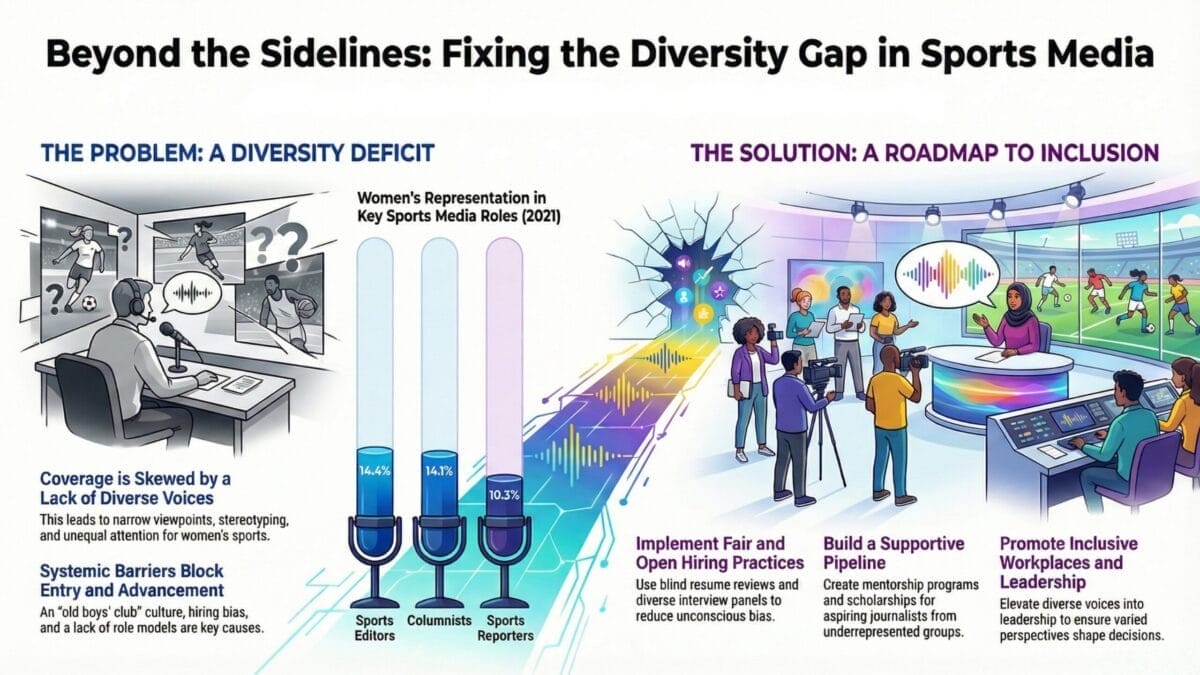
The stadium buzz, the game’s intensity: sports can unite people. But look closer and you will spot a problem: the lack of diversity in sports media. A 2021 study by The Institute for Diversity and Ethics in Sport (TIDES) showed that women held only 14.4% of sports editor jobs, 14.1% of columnist jobs and a dismal 10.3% of sports reporter jobs. This is not good enough. The imbalance hurts coverage, limits potential and distorts sports journalism. Let us examine the causes, understand the effects and champion solutions for a more inclusive field.
Grasping the Roots of the Diversity Shortfall
The lack of diversity in sports media developed over time. It comes from deep biases, systemic problems and a tangled mix of issues. To fix this, we must first grasp its origins.
- Past Underrepresentation: Sports journalism has long been a mostly white, male area. This makes a loop where those in power tend to pick people like themselves for hiring and promotion, leading to a bland setting that smothers different views.
- Limited Opportunity: People from overlooked backgrounds often face big challenges entering sports media, such as little access to good education, internships and connections. An “old boys’ club” attitude can keep outsiders from joining and moving up.
- Hiring Bias: Hidden biases can sway hiring and promotion, causing good candidates from underrepresented groups to be missed. Studies prove that implicit biases can skew resume reviews and cloud impressions during interviews.
- Missing Role Models: Not having enough diverse role models can deter hopeful journalists from marginalized backgrounds. If they do not see people like them succeeding, they might feel their chances are low.
How Sports Media Makeup Affects Coverage
Sports media representation shapes the stories shared and the voices heard. A diversity shortage can cause:
- Narrow Views: When most sports journalists share similar backgrounds, they might lack the cultural understanding to accurately report on diverse athletes and communities, causing skewed or incomplete reporting.
- Stereotyping: Without varied voices in newsrooms, the risk of stereotypes and misrepresenting marginalized athletes grows. This can seriously harm individuals and communities.
- Unequal Attention: A diversity absence can mean different sports and athletes get unequal attention. For example, women’s sports and sports with athletes from underrepresented communities often get less coverage and resources than men’s sports.
- Missed Stories: Diverse journalists bring new angles and uncover stories that might go unseen. They also handle stories with care for the communities they show.
I remember going to a sports conference where diverse views were clearly lacking. Talks often focused on common sports and athletes, with little thought for marginalized communities. This showed the need for more diversity in the industry.
Plans for Fixing Sports Journalism Diversity
To grow a more inclusive sports journalism diversity, we need a plan that fixes inequalities and makes fair chances for everyone. Consider these ideas:
- Boost Diversity in Schooling: Support programs that urge students from underrepresented backgrounds to chase sports journalism careers, such as scholarships and mentorships.
- Set Up Open Hiring: Use hiring steps that cut bias and boost diversity, like blinded resume reviews, diverse interview teams and focused recruitment.
- Offer Mentors: Make mentorship programs that pair hopeful journalists from underrepresented groups with experienced pros, giving them guidance and support.
- Build Inclusive Workplaces: Grow workplace cultures that support diverse employees, through diversity training and policies that boost inclusion.
- Raise Leaders: Promote people from underrepresented groups to leadership jobs in sports media, making sure varied views affect decisions at all levels.
- Back Independent Media: Support media that focuses on diverse sports and athletes, giving a voice to overlooked views.
How Sports Media Shapes Views
Sports media representation can shape how people see athletes and sports. When media always shows certain groups negatively, it can reinforce biases. Media that highlights diverse athletes and stories can grow understanding.
Consider the coverage of women’s sports. For years, women’s sports have suffered from underfunding, causing the view that they are less important than men’s sports. But when women’s sports get equal coverage, they can draw big crowds and make revenue.
Overcoming Hurdles to Build Inclusive Sports Media
Building a more inclusive sports journalism diversity will have challenges. Resistance to change and limited resources can slow progress. By facing these issues together, we can make a more fair industry.
One big challenge is overcoming resistance. Some people might resist diversity moves because they are fine with how things are. We must address these fears and stress the benefits of diversity, such as more creativity.
Another challenge is confronting biases. We must learn about these biases and use ways to lessen their effect, including diversity training.
Growth Options in Varied Sports Media
Embracing diversity in sports media is more than social responsibility; it is a growth chance. A more diverse industry can draw new fans and unlock new income. By using the skills of people from underrepresented backgrounds, sports media groups can gain an edge.
I have seen how diverse teams can make new ideas. When people from different backgrounds gather, they can challenge old thoughts and make new solutions.
The Future of Inclusive Sports Media
The future of sports media has diversity woven into the industry’s core. A world where athletes from all backgrounds are celebrated and where everyone can thrive. This vision needs a group effort from sports media groups and schools.
I see a future where the lack of diversity in sports media is history. An industry where diverse voices, including those of female sports professionals, are heard is vital for a balanced media landscape. This is doable, but it needs a commitment to change.
Practical Moves to Boost Sports Journalism Diversity
Beyond strategies, groups can take steps to promote sports journalism diversity:
- Support Diverse Voices: Find and boost the voices of journalists from underrepresented groups. Share their work and push for their inclusion in media.
- Challenge Stereotypes: Question stereotypes in sports media. Use your voice to fight harmful stories.
- Mentor Journalists: If you are an experienced sports journalist, mentor journalists from underrepresented groups. Share your knowledge as they grow.
- Demand Answers: Hold sports media groups to account for their diversity moves. Ask about their hiring and their dedication to inclusive workplaces.
- Invest in Media: Support media that focuses on diverse sports. These platforms give a voice for overlooked groups.
The Financial Argument for Sports Media Representation
The reasons for sports media representation is crucial for promoting diversity within the media landscape. are strong, and there is a financial case. A diverse sports media world can unlock new markets and grow revenue. By serving diverse groups, sports media groups can tap markets and grow.
Consider the growth of sports in new markets. These markets will want sports media content for their interests. Sports media groups that engage with these markets will succeed.
Storytelling: Boosting Voices
Storytelling can grow understanding. By sharing stories of athletes from diverse backgrounds, sports media can break barriers and build a better society. These stories can inspire people to beat problems and chase dreams.
I have been moved by stories of athletes who have overcome odds to succeed. These stories show that anything is possible.
Closing: A Call for Inclusive Sports Media
The lack of diversity in sports media is a problem with effects. It hurts coverage and sports journalism. By understanding the causes and using strategies, we can make a more inclusive industry. This needs commitment. By embracing diversity, we can unlock potential and make a better system. We must do this.

Vince Douglas Gregory is the ‘petulant puppet master’ of a sports media landscape addicted to scripted rage and performance art. As the architect of VDG Sports, he bypasses the corporate talking heads to expose the unfiltered truth behind the narratives.
An unstable thinker and astute scholar, Vince thrives on dismantling the mediocre click-bait addicts who trade reality for engagement. If you want boring stats, go elsewhere. If you want the raw reality of the game, you’re in the right place. Consider yourself warned.