
NFL vs USFL: The League Battle You Never Knew About
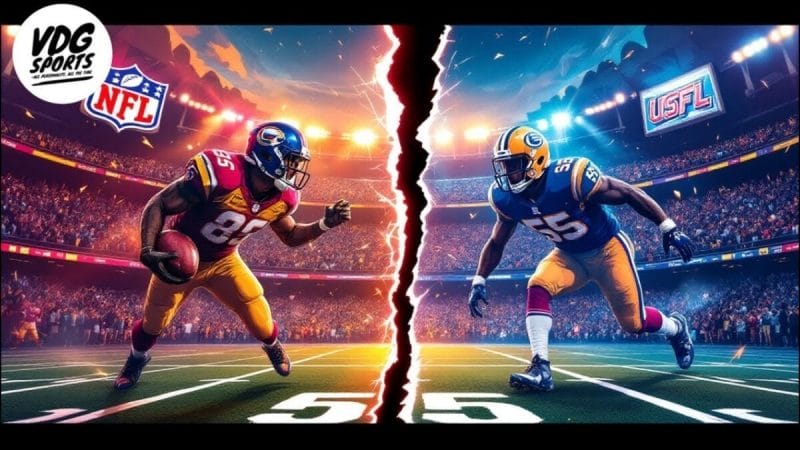
For a short, chaotic window in the 1980s, a scrappy upstart league changed how professional football was played, promoted, and financed. The United States Football League (USFL) arrived with bold signings, regional teams like the Michigan Panthers and Pittsburgh Maulers, and an ambition to carve out real space against the NFL. It did not survive, but its impact still echoes in player pay, league strategy, and the idea that spring football can matter.
Table of Contents
- The USFL’s bold entrance
- How the USFL challenged the NFL
- Why the USFL collapsed
- The antitrust case and its irony
- What the NFL learned
- Legacy and modern echoes
- Why it still matters
The USFL’s bold entrance
The USFL launched in 1983 as a spring and summer league, promising more football during the NFL offseason and a new opportunity for college stars. Rather than trying to be a mirror image of the NFL, the USFL mixed fresh marketing, aggressive recruiting and a regional team model designed to tap local fan bases. Teams like the Michigan Panthers became immediate draws, while expansion clubs such as the Pittsburgh Maulers reflected the league’s rapid growth ambitions.
How the USFL challenged the NFL
The USFL pushed the NFL in several concrete ways:
- Aggressive player recruitment — The USFL offered large contracts to top college prospects, convincing many elite players to sign with the new league instead of going straight to the NFL.
- Attention-grabbing ownership — Some USFL owners were high-profile and outspoken, raising the league’s profile and drawing national media attention.
- Experimentation with presentation — The league tried new marketing approaches, regional rivalries and scheduling that aimed to keep football in the public eye year-round.
Notable players and what they meant
The USFL roster included names that would become familiar to NFL fans or were already household names from college ball. Big-money signings and quality talent proved the league could compete for top players, and many athletes used the USFL as leverage or a springboard to later NFL careers. That dynamic helped shift the market for player salaries and negotiating power.
Why the USFL collapsed
The USFL’s collapse was not a single failure but a series of missteps and structural problems:
- Financial overreach — Several owners spent heavily to secure top talent, creating an unstable financial picture across the league.
- Strategic disagreements — Some owners wanted to keep the USFL as a spring league; others pushed to move to the fall to go head-to-head with the NFL. That split undermined unity and long-term planning.
- Television and exposure limits — While the USFL had TV partners, the league never achieved the same broadcast stability and reach as the NFL.
- Legal gambit backfires — The USFL pursued an antitrust lawsuit against the NFL. The league technically won but was awarded only nominal damages, leaving it unable to recover financially.
The antitrust case and its irony
The USFL sued the NFL for monopolistic behavior and ultimately won in court, but the jury awarded only a single dollar in damages, which was tripled to three dollars under antitrust law. The legal victory proved pyrrhic: it provided moral vindication without the financial lifeline the league hoped for.
What the NFL learned
The NFL watched and adapted. Competition from the USFL nudged the NFL toward better player contracts, more aggressive recruiting of college talent, and scrutiny of scheduling and broadcast strategies. Even failed rivals can force dominant leagues to improve the product and reassess how talent is valued.
Legacy and modern echoes
The USFL folded, but its ideas did not die with it. The concept of spring football continued to reappear in later attempts to expand professional football—some found short-term success, others folded quickly. The USFL also left a legacy in how players negotiate and how owners think about media and market strategy.
Key takeaways:
- Competition breeds innovation. The USFL accelerated change in player pay and league tactics even without surviving long-term.
- Strategy is as important as money. Growing too fast, splitting on core strategy, or misreading broadcast realities can undo even a well-funded league.
- Legacy can be indirect. A league does not need decades of existence to leave a lasting mark on a sport.
Why it still matters
Stories of league rivalries are more than nostalgia. They teach how sports ecosystems evolve: where talent flows, how markets respond, and how rulebooks and broadcasts get shaped. The USFL versus the NFL is a case study in ambition, risk, and the complex economics of professional sport. Even decades later, the ripple effects are visible in how players are valued, how spring football is marketed, and how teams approach building a fan base.
The USFL may have been short-lived, but its challenge forced a conversation the NFL could not ignore.

Vince Douglas Gregory is the ‘petulant puppet master’ of a sports media landscape addicted to scripted rage and performance art. As the architect of VDG Sports, he bypasses the corporate talking heads to expose the unfiltered truth behind the narratives.
An unstable thinker and astute scholar, Vince thrives on dismantling the mediocre click-bait addicts who trade reality for engagement. If you want boring stats, go elsewhere. If you want the raw reality of the game, you’re in the right place. Consider yourself warned.