
Football gets branded as the beautiful game. That label gets repeated so often people stop examining what they are actually being sold. Pull back the curtain, though, and a different picture appears. A low scoring spectacle becomes sacred. Manufactured drama gets treated like authenticity. Tribal loyalty gets mistaken for depth. And anyone who questions the script gets pushed to the edge of the conversation.
This is for the contrarians. The ones who are not hypnotized by the crowd noise, not seduced by choreographed celebrations, and not convinced that every controversial call is just part of the charm. If football has ever felt less like a sport and more like an elaborate emotional funnel, you are not imagining it.
Table of Contents
- Football’s appeal starts with a very simple illusion
- The fan culture can feel less organic than advertised
- Goal celebrations often overshadow the actual play
- Rivalries are powerful, but they can also be a distraction
- Refereeing controversy is not a side issue
- Diving turns deception into strategy
- Why football defiance matters
- Signs you may already be a football contrarian
- FAQ
Football’s appeal starts with a very simple illusion
At its core, football is sold through scarcity. Goals are rare, so each one is inflated into a dramatic event. That rarity creates tension, and tension gets marketed as depth. A single moment can erase long stretches of caution, stale buildup, and tactical dead air. The scoreline stays tight, the anticipation grows, and people convince themselves that patience equals brilliance.
That is the trick.
When scoring is infrequent, every breakthrough feels monumental. But that emotional payoff can hide how little actually happened for most of the match. The game’s biggest strength, for its critics, is also its most effective disguise. A goal can cover for an otherwise uneventful contest. It can make a thin experience feel richer than it really was.
That does not mean football has no complexity. It means complexity is often used as a shield against criticism. If someone finds the match dull, the standard response is that they simply do not appreciate the nuance. Yet sometimes boredom is not a failure of understanding. Sometimes it is a perfectly accurate reading of what is on the pitch.
If you have ever looked at a celebrated nil nil draw and wondered whether everyone else was pretending, that instinct deserves more respect than football culture usually gives it.
The fan culture can feel less organic than advertised
Supporters are often described as the soul of the sport. The chants, the colors, the rituals, the generational loyalty, all of it is supposed to represent belonging. And yes, belonging is powerful. That is exactly why football leans on it so heavily.
But there is another side to that collective energy. It can flatten independent thought.
Once identity becomes tied to a club, objectivity usually leaves the room. Criticism starts to feel like betrayal. Rivalries become moral frameworks. Entire sections of the football world stop assessing what happened and start defending what must be defended. The badge comes first. Truth comes later, if at all.
Rejecting that pressure is its own kind of freedom. You do not have to chant on cue. You do not have to inherit a rivalry and carry it like a family heirloom. You do not have to confuse participation with insight.
Standing apart from football’s groupthink does not make you joyless. It can make you clearer. If the wider culture around the sport feels overly tribal, there is value in stepping back and questioning why that tribalism is treated as noble instead of manipulative. The same communal pull that makes football globally dominant is part of what makes it resistant to honest critique, which is worth keeping in mind when thinking about the global appeal of football.
Goal celebrations often overshadow the actual play
A goal used to be an outcome. Now it is often a production.
There is the sprint, the pose, the chest pounding, the pointed fingers, the choreographed routine, the social media ready camera angle. In many cases, the celebration becomes more memorable than the buildup, the finish, or the tactical move that created the chance in the first place.
That is not an accident. Football understands spectacle. It knows how to turn isolated moments into emotional advertising. The celebration becomes a trailer for the broader drama. It extends the feeling, packages the image, and keeps the mythology alive.
For the contrarian, that is exactly where suspicion should grow. When the performance after the play becomes bigger than the play, it raises an obvious question: what exactly is being celebrated, the execution or the theater?
None of this means players should be emotionless. It means the pageantry deserves scrutiny. Grand gestures can distract from how little separation there was between teams, how little creativity existed over long stretches, or how much of the sport now depends on presentation rather than pure substance.
Rivalries are powerful, but they can also be a distraction
Football rivalries are sold as sacred history. Clubs, cities, regions, and nations are placed into narratives that are supposed to matter far beyond the match itself. Some rivalries do emerge from genuine local tension or longstanding competition. But football also knows how to amplify those divisions because division drives engagement.
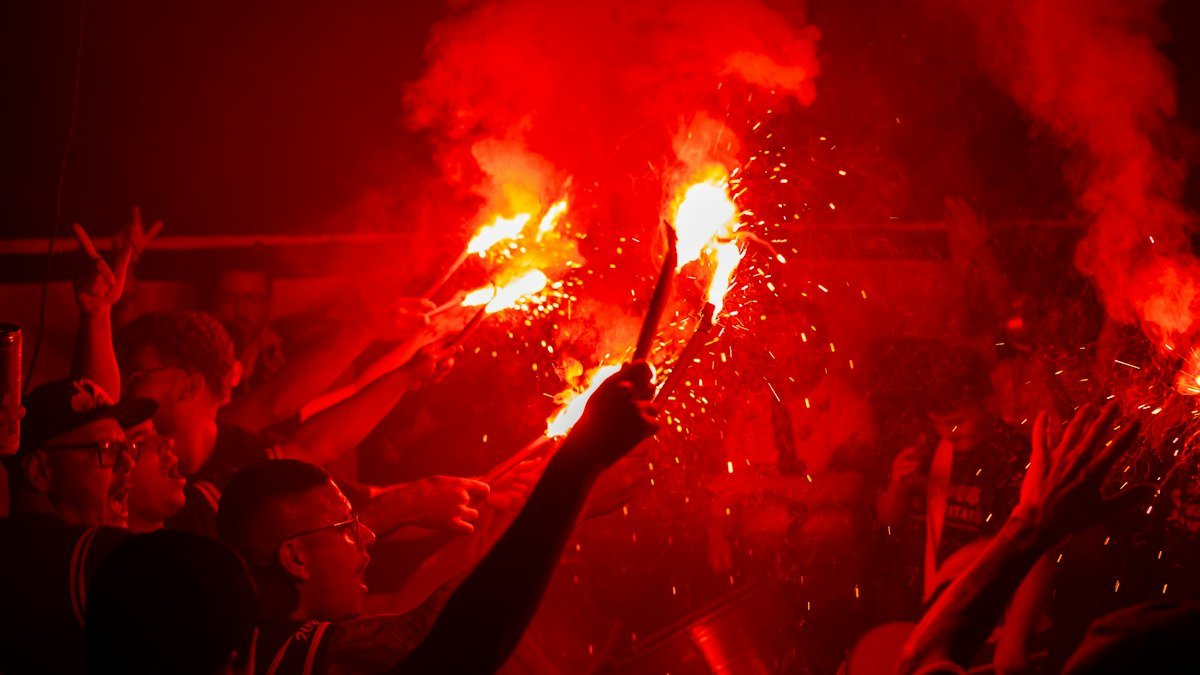
Rivalries keep people emotionally locked in. They create a built in reason to care, a built in villain, a built in sense that every result is part of a larger war. That is useful for leagues, broadcasters, brands, and endless cycles of sports debate.
The contrarian move is to rise above that script.
You do not need to inherit grudges to understand the sport. You do not need to choose sides in every feud. In fact, one of the clearest positions available is broad skepticism toward the whole machine. Instead of joining one tribe against another, you can align with a higher calling: criticism without allegiance.
That kind of nonpartisan football skepticism matters because it removes the usual blind spots. Once loyalty is gone, the game gets easier to evaluate. The myths lose their cover. The excuses sound weaker. The patterns become impossible to ignore.
Refereeing controversy is not a side issue
If football wants to present itself as the pinnacle of sporting purity, then its relationship with officiating is a major problem. Disputed calls have always been part of the sport, but technology was supposed to clean things up. Instead, it often created a fresh layer of confusion.
VAR was introduced as the answer to clear and obvious mistakes. It may step in only for clear and obvious errors in four situations (goals, penalties, direct red cards and mistaken identity), and it was written into the Laws of the Game on 3 March 2018 (ESPN). In practice, it frequently feels like a distant authority manufacturing fresh uncertainty. Offside reviews become forensic puzzles. Handball decisions can swing on interpretation. Long pauses can drain spontaneity from the experience, and the final ruling can still trigger debate. The Premier League’s own data, measured part-way through each season, put the average VAR delay at 40 seconds a match in 2024/25 against 1 minute 6 seconds in 2023/24, so the complaint is about the worst reviews, not the average (Premier League, 7 Feb 2025).
The issue is not just that mistakes happen. The issue is that football has built an entire system that can slow the game down, replay every angle, and still leave people unconvinced. That is not progress. That is bureaucracy with a replay button.
How Often Premier League Decisions Were Correct
For anyone frustrated by how technology has changed the emotional rhythm of the sport, this perspective on VAR and the fan experience explores the same tension from another angle.
The sport asks for trust while repeatedly producing decisions that look arbitrary, overmanaged, or inconsistent. That is fertile ground for dissent. Skepticism is not cynicism for its own sake. It is a rational response to a game that claims objectivity while regularly drowning in interpretive chaos.
If you want broader context on how video review systems have evolved across sports, the IFAB VAR protocol is a useful starting point.
Diving turns deception into strategy
Then there is one of football’s least defensible habits: diving.
A slight touch becomes a collapse. A brush on the shoulder becomes a full body tragedy. A player who looked perfectly fine one second is suddenly writhing as if the laws of anatomy have been suspended for tactical gain. Everyone knows the routine. Some condemn it. Others excuse it as gamesmanship. But however it gets framed, the result is the same. Deception goes unpunished often enough to remain part of the playbook. A 2011 PLOS ONE study of 60 televised matches in six professional leagues found 169 dives among 2,803 falls, and referees punished none of them. The study is now 15 years old, and the Premier League’s 2025/26 guidance says simulation results in a caution (Premier League).
What One Study Found in 60 Televised Matches
This is where football’s moral self image really starts to wobble. A sport cannot spend all day calling itself beautiful while regularly tolerating theatrical injury performances designed to manipulate officials.
The most frustrating part is how normalized it becomes. Commentators rationalize it. Fans defend it when their side benefits. Managers dodge accountability. And the cycle continues.
If football truly wanted to reduce this behavior, the consequences would need to target repeat offenders in a meaningful way. That idea lines up with the case made in this piece on stopping diving by dealing with bad actors directly.
For the contrarian, diving is not a minor annoyance. It is evidence. It shows how often image, influence, and manipulation can matter as much as skill.
Why football defiance matters
Rejecting football orthodoxy is not about being difficult for the sake of it. It is about refusing to confuse popularity with immunity from criticism.
Football is global, wealthy, powerful, and culturally protected. FIFA has 211 member associations, and the top 20 clubs earned over €12 billion in 2024/25 for the first time, with Real Madrid close to €1.2 billion (Deloitte Football Money League). That combination can make it feel untouchable. But any institution that big needs people willing to challenge the standard story. It needs people who notice when manufactured drama passes for authenticity. It needs people who can tell the difference between passion and programming.
That is the spirit behind football defiance.
It means seeing beyond the crowd. It means questioning why low scoring tension is automatically treated as profound. It means recognizing when fan identity becomes conformity, when celebrations become theater, when rivalries become marketing, when refereeing becomes procedural theater, and when diving becomes accepted fraud.
You do not have to surrender your instincts just because the world loves the game. Standing apart has value. Independent judgment has value. And when a sport is surrounded by this much mythology, defiance becomes a form of clarity.
More sharp, skeptical sports commentary can be found at VDG Sports.
Signs you may already be a football contrarian
- You are not impressed simply because a match is tense.
- You think long stretches of inactivity should count in the overall evaluation.
- You find some celebrations more rehearsed than authentic.
- You see tribal fan culture as emotionally powerful but intellectually limiting.
- You believe VAR often adds confusion instead of solving it.
- You have little patience for exaggerated contact and theatrical injuries.
- You prefer objectivity over club loyalty and inherited rivalry.
FAQ
What does football defiance actually mean?
It means resisting the usual assumptions around football and evaluating the sport without surrendering to hype, tribal loyalty, or cultural pressure. The focus is on independent judgment, not automatic admiration.
Is this argument saying football has no value at all?
No. The point is that football’s reputation often protects it from criticism. A sport can have global appeal and still deserve hard questions about entertainment value, officiating, theatrics, and groupthink.
Why are low scoring games criticized so heavily here?
Because rarity can inflate perceived quality. A single goal can make an otherwise uneventful match feel meaningful. The criticism is aimed at the assumption that tension alone always equals substance.
Why is VAR such a major issue in football criticism?
VAR was meant to improve accuracy, and the numbers suggest it has: at the 2018 World Cup it had a 99.3% success rate against 95% without it, and the Premier League reports 96% correct outcomes after VAR in 2024/25. But reviews can still create delays, confusion, and continued disagreement. When a system slows everything down and still fails to inspire confidence, criticism is inevitable.
Why are diving and exaggerated injuries treated as more than minor annoyances?
Because they can reward deception. When players can gain an advantage by exaggerating contact, the sport is incentivizing performance as much as play. That undercuts claims of purity and fairness.
Can someone enjoy football and still agree with these criticisms?
Absolutely. Criticism does not require total rejection. It is possible to appreciate parts of the sport while still being honest about its flaws, contradictions, and theatrical tendencies.

Vince Douglas Gregory is the ‘petulant puppet master’ of a sports media landscape addicted to scripted rage and performance art. As the architect of VDG Sports, he bypasses the corporate talking heads to expose the unfiltered truth behind the narratives.
An unstable thinker and astute scholar, Vince thrives on dismantling the mediocre click-bait addicts who trade reality for engagement. If you want boring stats, go elsewhere. If you want the raw reality of the game, you’re in the right place. Consider yourself warned.